Home / Articles
SMILE Surgery for Dry Eyes: Is It Better?
Home / Articles
SMILE Surgery for Dry Eyes: Is It Better?
It’s late afternoon in Busan, and the rain taps softly against the clinic windows. A young office worker, glasses slightly fogged from the humidity, sits across from me in the consultation room. She works long hours at a fintech start-up, toggling between three computer screens all day.
This is not just casual curiosity—it’s a reflection of a growing awareness in Korea about how digital lifestyles, environmental factors, and surgical choices intersect with our tear health. People are starting to realize that clear vision alone isn’t enough. Comfort and stability matter just as much.
So let’s break it down: Why does dry eye matter so much in refractive surgery, and does SMILE really have an advantage?
In our country, dry eye syndrome is almost a background condition—so common that many people assume it’s “just normal.” We see it in:
Add to that the environmental triggers unique to Korea:
Spring brings yellow dust and fine sand from the Gobi Desert
Winter indoor heating dries the air in homes and offices
Summer brings powerful air conditioning in subways, cafes, and workplaces
Year-round PM2.5 fine dust pollution further stresses the eyes
What people often overlook is that even mild dryness before surgery can get worse temporarily after surgery. That’s not because the surgery is “bad for the eyes”—it’s because of how the corneal nerves and tear film work together.
Your cornea isn’t just a clear window—it’s one of the most sensitive tissues in your body, packed with nerve endings. These nerves constantly send signals to the brain about the eye’s surface condition. If your eyes get dry, the nerves tell your tear glands to produce more moisture.
When we perform vision correction surgery, some of those nerves are inevitably cut. Until they regenerate—which can take weeks to months—your eyes may not “notice” dryness as quickly, meaning tear production is reduced. That’s why dryness after surgery is so common.
The amount of nerve disruption depends on the surgical method.
In traditional LASIK, we create a corneal flap roughly 20mm in circumference. This flap creation cuts through a wide arc of corneal nerves, causing a temporary reduction in tear production. While most people recover nerve function within 6–12 months, the early months can be challenging for those with borderline dryness.
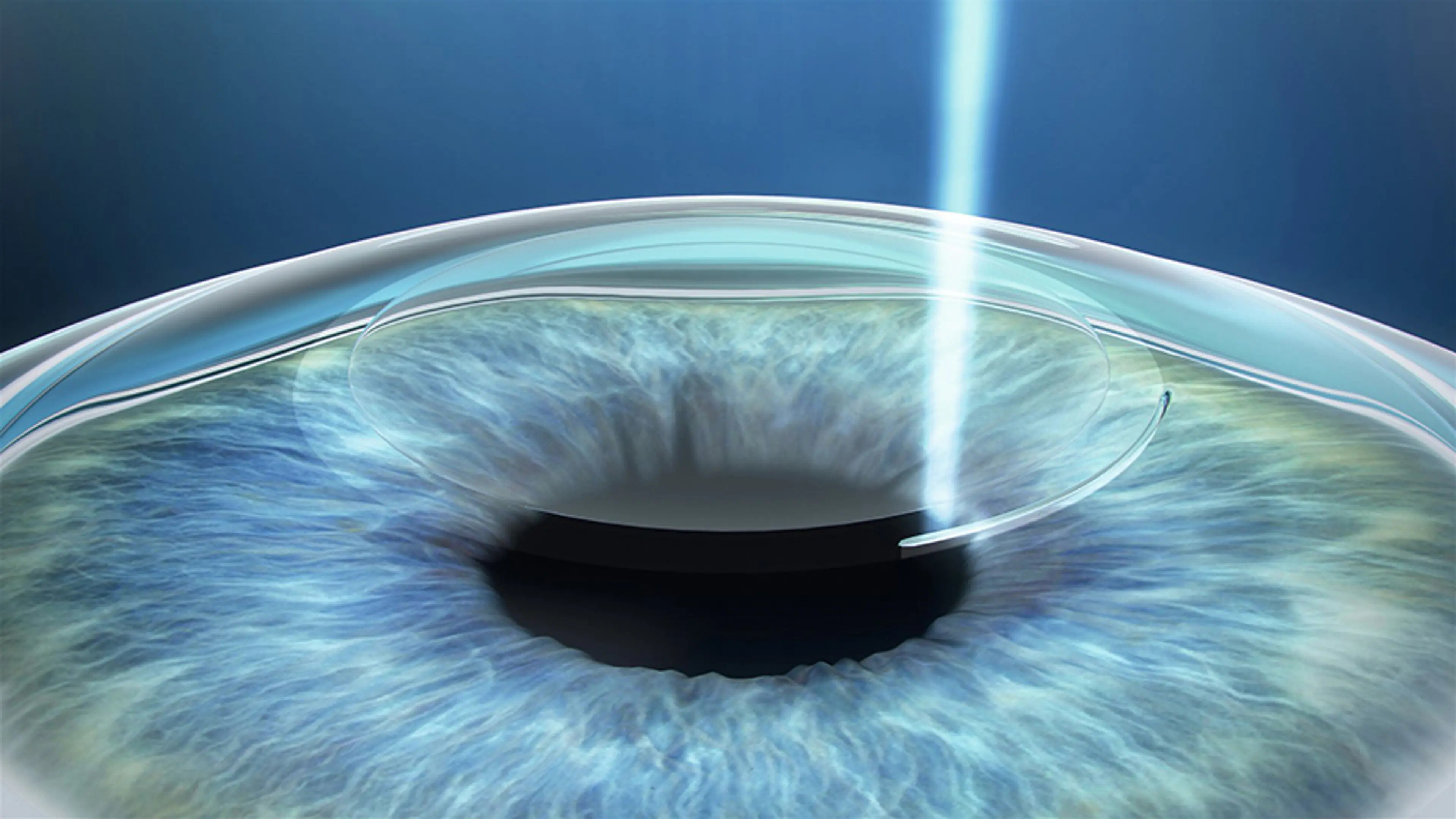
SMILE (Small Incision Lenticule Extraction) takes a more minimal approach. Instead of a wide flap, the laser creates a lenticule (a thin disc-shaped piece of corneal tissue) inside the cornea. We remove it through a small incision, typically less than 4mm wide.
This smaller incision means:
Far fewer corneal nerves are cut
The corneal surface stays more biomechanically stable
Tear film recovers faster
Several studies from Korean and international centers back this up:
From a surgeon’s point of view, these findings match what we see in our own patients at Jryn Eye Clinic: SMILE consistently results in milder early dryness and a smoother comfort curve post-surgery.
Now, let’s keep it honest—SMILE is not a cure for dry eyes. If you already have moderate or severe dry eye disease, the surgery may still cause a noticeable flare-up of symptoms, even if it’s gentler on the corneal nerves than LASIK.
That’s why at Jryn Eye Clinic, our pre-surgery process includes:
If the tear film is unstable or the oil glands are clogged, we treat that first. This might mean:
Prescription anti-inflammatory drops
Thermal pulsation therapy for oil glands
Punctal plugs to retain tears
Omega-3 fatty acid supplementation
Eyelid hygiene routines
In some cases, we delay surgery for 1–3 months while improving tear health, because a stable ocular surface means faster healing and sharper vision.
In our experience, SMILE is particularly suitable for:
A 28-year-old English teacher came to us after six years of struggling with contact lenses. She had mild dry eye symptoms—burning in the evenings and occasional blurriness—but her tear volume was borderline low.
She was nervous about LASIK because her sister had struggled with dryness after surgery in another clinic. After a full dry eye workup, we recommended SMILE, paired with two weeks of pre-surgery eyelid warming treatments to improve her tear oil layer.
The result? She noticed minimal dryness in the first week and was completely comfortable without artificial tears by her one-month check-up. Her sister, who had LASIK, still used drops regularly at the six-month mark.
For us, vision correction is not a “quick in, quick out” process. Every eye is different, and so is every tear film. Our approach blends technology with medical caution:
If you’re prone to dryness, SMILE offers real advantages—smaller incision, fewer nerve cuts, faster tear recovery. For many patients, that translates to greater comfort in the early healing period and a smoother return to normal life.
But “better” is not the same as “perfect.” Even SMILE requires a healthy tear film to start with, and no surgery can fully protect against dryness caused by lifestyle, environment, or aging.
Get a thorough dry eye evaluation before deciding. If you’re in Busan—or even visiting Korea—Jryn Eye Clinic offers both advanced diagnostics and the experience of Dr. Han Sang Yeop, who has helped countless patients choose the right procedure for their unique eyes.