Home / Articles
Is EVO ICL Painful? What Busan Patients Report
Home / Articles
Is EVO ICL Painful? What Busan Patients Report
If you're living in Busan or traveling here for vision correction, chances are you’ve heard of EVO ICL. It’s become a popular alternative to LASIK, especially for people with thin corneas, high myopia, or dry eyes. But one question always seems to surface before any decision is made: "Is EVO ICL painful?"
At Jryn Eye Clinic, located in the heart of Busanjin-gu, we hear this concern almost daily. As a center that has helped thousands of patients through advanced procedures like SMILE LASIK and EVO ICL, we want to provide honest, medically grounded insight—rooted in both international evidence and our own patients' real-world experiences right here in Busan.
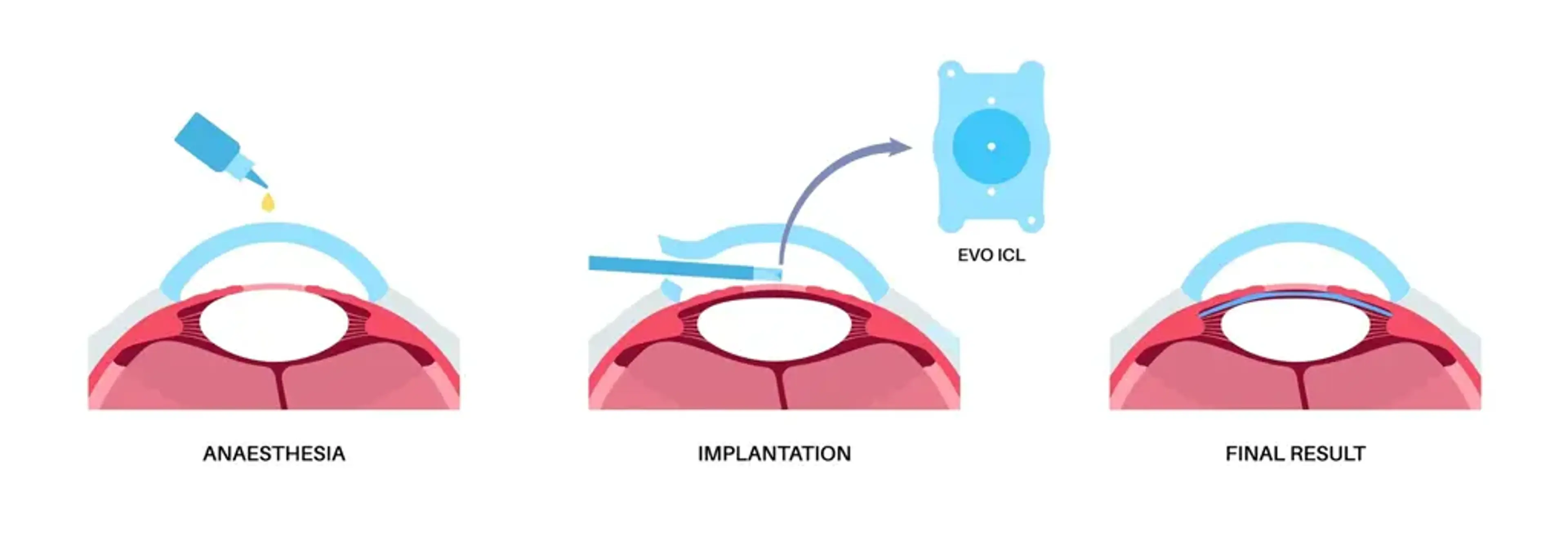
EVO ICL (Implantable Collamer Lens) is a vision correction procedure where a soft, biocompatible lens is implanted between your iris and natural lens. Unlike LASIK, which reshapes the cornea by removing tissue, EVO ICL is additive. It preserves your corneal structure entirely. That makes it ideal for people with high prescriptions or who are not suitable for laser-based procedures.
The surgery typically takes around 15 to 20 minutes per eye:
You receive topical anesthetic drops.
A tiny incision (less than 3 mm) is made in the cornea.
The lens is folded and inserted into place behind the iris.
Once in position, it unfolds and settles naturally.
No stitches are needed—the incision self-seals.
Most patients walk out the same day with improved vision, and full recovery usually happens within a week. But how does it feel? Let's get to the real question.
From a strictly medical standpoint, EVO ICL is considered a low-discomfort procedure. The majority of patients report little to no pain during surgery and minimal discomfort during recovery.
But that doesn’t mean "zero sensation." Here's what real patients in Busan—as well as global studies—report:
Rarely does anyone describe sharp or intense pain. Most use phrases like "a bit strange," "like an eyelash was stuck," or "pressure but not pain." At Jryn Eye Clinic, patients often say, "It felt like something was happening, but it didn't hurt."
The key difference lies in the surgical technique:
Also, there's no "burning smell" or laser noise with EVO ICL, which some LASIK patients find unsettling. Many people who are nervous about eye surgery find EVO ICL surprisingly easy to tolerate.
And unlike surface ablation techniques such as PRK, which can result in a week or more of gritty, painful recovery, EVO ICL patients typically feel fine within a day. In fact, many describe the experience as "strange but painless," even during the moment the lens is inserted.
Let’s be realistic. Even a gentle surgery can come with a bit of discomfort. Here's what you might expect within the first day:
These symptoms usually resolve within 6 to 12 hours. Most patients rest with their eyes closed the day of surgery. By the next morning, they often wake up with noticeably clearer vision and no significant discomfort.
We typically prescribe eye drops (antibiotic, anti-inflammatory, and lubricating drops) for several weeks to ensure a smooth recovery. Following instructions carefully helps avoid irritation or complications.
Some patients also mention minor dryness, especially if they were long-time contact lens users. We recommend preservative-free artificial tears to help with this. In general, the level of discomfort is far below what most people expect.
While pain is rare, there are red flags that should never be ignored:
These symptoms could signal issues like elevated intraocular pressure, inflammation, or even infection. Fortunately, complications are rare, especially when the procedure is done by experienced hands—like Dr. Han Sang Yeop and our team here at Jryn.
One reason we schedule multiple follow-up appointments (1 day, 1 week, 1 month, and beyond) is to catch these rare issues early. Korean patients tend to be highly compliant with check-ups, which helps ensure a safe recovery.
In our clinic, we've treated office workers, college students, travelers from abroad, and retirees from the Busan area. Their comments help paint a more human picture of the EVO ICL experience:
One international patient from Japan who visited Busan specifically for EVO ICL told us, "I had worse pain with my contact lenses. This was nothing. The procedure was gentle, and I was sightseeing within two days."
Cultural habits in Korea—like diligent health follow-ups and sensitivity to even mild discomfort—mean patients here are particularly good at describing their symptoms. That helps us fine-tune post-op care and ensure smoother recoveries.
We often find that once patients hear the experiences of others, their fears dissolve quickly. Pain is rarely a major concern after they walk through the process firsthand.
One thing many patients overlook is that pain levels can vary depending on:
At Jryn Eye Clinic, we go beyond standard diagnostics. We use anterior segment OCT, endothelial cell analysis, and intraocular pressure mapping to ensure each patient is a perfect candidate. That translates to fewer surprises, less discomfort, and better outcomes.
Additionally, we tailor your drop schedule based on your corneal status, tear film quality, and ocular response. This personalized approach minimizes inflammation and speeds up visual stabilization.
Patients often ask, "What about a month later? Do you still feel it?" The answer is almost always no.
The EVO lens is biocompatible and designed to remain in your eye for decades without causing irritation. Most patients forget it's even there. There is no foreign body sensation long-term, and since it doesn't affect the corneal surface, dry eye tends to be less of an issue compared to LASIK.
Occasionally, patients may notice halos or glare at night in the first few weeks. These usually fade as your eyes adapt. Visual outcomes are typically very sharp—often better than what patients ever experienced with glasses or contacts.
If you're hesitating because you're afraid EVO ICL will be painful, you can breathe a little easier. The truth is: while some mild discomfort is normal, true pain is extremely rare. Most of our Busan patients leave the clinic saying, "That was easier than I expected."
Choosing the right clinic—with experienced hands, modern equipment, and strong aftercare—is the best way to ensure a smooth experience. EVO ICL offers excellent visual outcomes, fast recovery, and, for most, a surprisingly comfortable journey.
The decision to undergo vision correction is personal and often emotional. At Jryn Eye Clinic, we believe that no one should have to choose between comfort and clarity. That’s why our team works tirelessly to ensure that your EVO ICL journey is not only effective, but also as painless and stress-free as possible.
If you’ve been struggling with glasses or contacts, especially if you’ve been told LASIK isn’t ideal for your eyes, consider booking a personalized consultation with us at Jryn Eye Clinic. We’ll walk you through every step—including what to expect before, during, and after surgery.