Home / Articles
ICL vs LASIK for High Myopia Comparison for US Patients
Home / Articles
ICL vs LASIK for High Myopia Comparison for US Patients
Choosing the right vision correction procedure is a life changing decision, especially for individuals living with high myopia. For many people in major American cities like New York City or Los Angeles, the daily frustration of thick glasses or uncomfortable contact lenses is a constant burden. You might find yourself searching for the best possible outcome, leading you to explore advanced options abroad. Jryn Eye Clinic in Seoul, South Korea, stands as a global leader in refractive surgery, offering specialized care that attracts patients from across the United States.
High myopia is more than just a strong prescription. It involves unique physiological characteristics of the eye that require a more nuanced approach than standard vision correction. When comparing icl vs lasik for high myopia, the stakes are high. You want a solution that provides crystal clear vision while preserving the long term health of your eyes. Dr Sang Youp Han and his expert team at Jryn Eye Clinic bring over twenty years of experience to this very choice. They have performed thousands of successful procedures, helping patients transition from a life of dependency on eyewear to one of visual freedom.
This comprehensive guide is designed to help you navigate the complexities of these two popular procedures. We will explore the technical differences, the recovery expectations, and why Seoul has become the preferred destination for Americans seeking world class eye care. By the end of this article, you will have a clear understanding of which path might be best for your specific needs. Our goal is to provide you with the knowledge and confidence to take the next step toward better vision.
As a clinic that prioritizes patient education, we believe in transparency. We use advanced technology, including artificial intelligence tools, to enhance our research and ensure our content remains accurate and easy to read. AI helps us structure complex medical information so that it is accessible to everyone, regardless of their medical background. However, every piece of information here is strictly reviewed by our board certified ophthalmologists to ensure it meets the highest clinical standards. Let us begin this journey by looking closely at what high myopia means for your surgical options.
High myopia is typically defined as a refractive error of negative six diopters or greater. For patients in this category, the eye is often longer than a standard eye, or the cornea has an unusually steep curve. This physical elongation can lead to a higher risk of certain retinal issues and makes the choice of surgery much more critical. When you have high myopia, a standard laser treatment may not always be the safest or most effective route.
Living with high myopia in a fast paced environment like Chicago or Houston often means dealing with significant peripheral distortion from thick lenses. It means the fear of losing your glasses in an emergency. These are the pain points that drive patients to seek permanent correction. At Jryn Eye Clinic, we understand that you are looking for more than just a prescription change. You are looking for a quality of life improvement.
The two primary contenders for treating this level of nearsightedness are Implantable Collamer Lenses known as ICL and Laser In Situ Keratomileusis known as LASIK. Both have evolved significantly over the last two decades. While LASIK remains the most famous name in vision correction, ICL has gained immense popularity for high myopia because it does not involve removing corneal tissue. This distinction is vital for patients whose corneas might already be thin or stressed by high prescriptions.
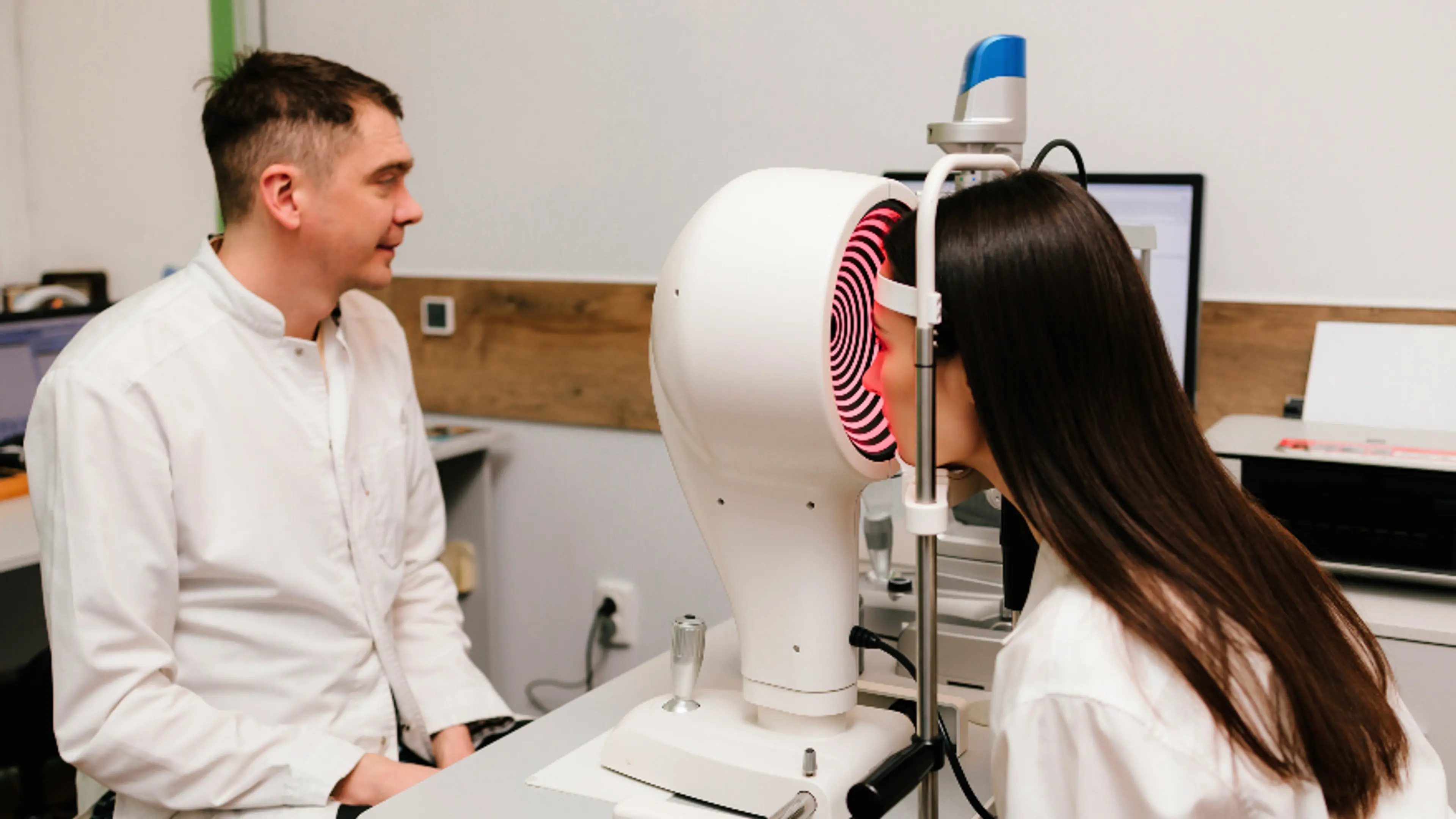
Dr Sang Youp Han emphasizes that the health of the cornea is the deciding factor in most cases. A thorough examination at Jryn Eye Clinic involves mapping the thickness and curvature of your eye with extreme precision. We use the latest diagnostic tools to ensure that whichever procedure you choose, the structural integrity of your eye is never compromised. This level of detail is why our clinic sees a high volume of international patients every year.
ICL implantation is often described as placing a permanent contact lens inside the eye. Unlike traditional contact lenses that sit on the surface, the ICL is positioned behind the iris and in front of the natural crystalline lens. It is made from a material called Collamer, which is highly biocompatible and contains a small amount of purified collagen. This material is soft, flexible, and designed to stay in harmony with your eye for a lifetime.
The procedure for ICL is additive rather than subtractive. This means nothing is removed from the eye. A micro incision is made, and the lens is folded and inserted. Once inside, it unfolds and provides immediate vision correction. This is a significant advantage when considering icl vs lasik for high myopia because it preserves the natural shape and thickness of the cornea. For many patients with very high prescriptions, this is the only viable option that offers high definition results.
One of the most reassuring aspects of ICL for patients coming from Phoenix or New York is its reversibility. While the lens is intended to be permanent, it can be removed or replaced by a surgeon if your vision needs change in the future. This provides a level of flexibility that laser surgeries cannot match. Furthermore, ICL is known for producing excellent night vision and a lower incidence of dry eye syndrome compared to laser based methods.
At Jryn Eye Clinic, ICL implantation is a core specialty. Dr Sang Youp Han has spent two decades refining the techniques used to place these lenses with microscopic accuracy. Our clinic uses the latest EVO ICL models, which feature a central port to allow for natural fluid flow within the eye. This technology eliminates the need for older techniques like peripheral iridotomies, making the recovery faster and more comfortable for the patient.
LASIK is a laser vision correction procedure that reshapes the cornea to change how light hits the retina. It involves creating a thin flap on the surface of the cornea using a femtosecond laser. This flap is then lifted, and an excimer laser is used to remove a precise amount of tissue from the underlying corneal bed. Once the reshaping is complete, the flap is laid back down, where it heals naturally without the need for stitches.
For many years, LASIK has been the gold standard for correcting nearsightedness. It is incredibly fast, often taking less than ten minutes per eye, and the visual recovery is almost instantaneous. Most patients can return to work or drive within twenty four hours. In the context of icl vs lasik for high myopia, LASIK is highly effective for moderate prescriptions. However, as the prescription gets higher, more corneal tissue must be removed to achieve the desired correction.
The limitation of LASIK for high myopia lies in the residual stromal thickness. This is the amount of corneal tissue left after the laser has done its work. If the cornea becomes too thin, it can lead to instability or a condition called ectasia. This is why board certified surgeons like those at Jryn Eye Clinic are very conservative when recommending LASIK for high prescriptions. We perform comprehensive screenings to ensure your cornea is thick enough to handle the treatment safely.
Despite these limits, modern LASIK technology has made it possible to treat higher ranges of myopia than in the past. We use advanced wavefront guided technology to create a customized map of your eye. This allows for a highly personalized treatment that reduces glare and halos. For patients who are good candidates, LASIK remains a life changing and reliable procedure with a very high satisfaction rate.
When we look at icl vs lasik for high myopia side by side, several key factors emerge that help patients make their choice. The first is the range of correction. ICL can typically treat myopia up to negative twenty diopters, whereas LASIK is usually capped around negative eight or nine diopters depending on corneal thickness. If your prescription is in the double digits, ICL is almost certainly the superior choice for safety and visual quality.
The second factor is the impact on the tear film. LASIK involves cutting a corneal flap, which temporarily disrupts the nerves responsible for tear production. This can lead to temporary dry eye symptoms, which might be bothersome for patients already living in dry climates like Phoenix. ICL does not involve a corneal flap or significant tissue removal, so the risk of chronic dry eye is significantly lower. This makes ICL an attractive option for those who already struggle with eye dryness.
Visual quality is another area where ICL often takes the lead for high prescriptions. Because the lens is placed closer to the nodal point of the eye and does not change the corneal shape, it often provides what patients describe as high definition vision. There is typically less induction of higher order aberrations, which are the small imperfections that cause night vision issues like starbursts or halos. While LASIK also provides excellent vision, ICL is often preferred for its crispness in low light conditions.
Recovery time is comparable for both, but the experiences differ. LASIK patients often feel a slight gritty sensation for a few hours but see clearly almost immediately. ICL patients might have a slightly longer period of stabilization, but they often report a dramatic wow factor the very next morning. At Jryn Eye Clinic, we provide detailed postoperative kits and instructions to ensure that regardless of the procedure, your recovery is smooth and monitored closely by our medical team.
Safety is the primary concern for any medical procedure. In the debate of icl vs lasik for high myopia, both procedures have excellent safety profiles when performed by experienced surgeons. LASIK has been studied for decades, and its long term effects are well documented. The main risk involves the corneal flap and the potential for regression over time, where the eye slightly shifts back toward nearsightedness.
ICL safety focuses on the internal health of the eye. Because a lens is being placed inside, there is a very small risk of infection or an increase in eye pressure. However, modern lens designs and surgical techniques have made these occurrences rare. At Jryn Eye Clinic, our chief director Dr Sang Youp Han uses his twenty plus years of experience to ensure the lens is sized perfectly for your eye. Proper sizing is the most important factor in preventing long term complications with ICL.
Long term stability is where ICL often shines for high myopia. Since no tissue is removed, the cornea remains strong and stable. LASIK results are also generally stable, but for very high prescriptions, there is a slightly higher chance that a touch up or enhancement might be needed years down the road. This is something we discuss extensively during your consultation in Seoul. We want you to choose the option that offers the best lifetime value and safety.
The role of technology cannot be understated here. Jryn Eye Clinic invests in the latest diagnostic and surgical platforms from around the world. We use specialized software to simulate surgical outcomes, allowing us to show you what to expect. This technological edge, combined with our doctors expertise, ensures that every patient receives a treatment plan tailored to their unique ocular anatomy. We prioritize your long term eye health over quick fixes.
Seoul has earned a reputation as the plastic surgery and eye care capital of the world. For patients from the United States, the appeal lies in the combination of advanced technology, high surgical volume, and cost effectiveness. A surgeon in Seoul might perform more vision correction procedures in a month than some US surgeons do in a year. This high volume leads to a level of precision and mastery that is difficult to find elsewhere.
Jryn Eye Clinic stands out in the competitive Seoul landscape because of our focus on international patient care and our team of highly specialized doctors. Dr Sang Youp Han, Dr Heo Joong Gu, and Dr Lee Jae Jung represent a powerhouse of ophthalmological knowledge. Whether you are dealing with high myopia or complex retinal issues, we have a specialist on staff to manage your care. We do not just perform the surgery, we manage your entire visual health.
For a patient flying from Los Angeles or New York, the logistics of medical travel can be daunting. We have structured our clinic to be as welcoming and efficient as possible for international guests. From the moment you contact us, you are assigned a coordinator who speaks your language and understands your needs. We assist with everything from initial virtual consultations to finding local accommodations in the vibrant heart of Seoul.
The cost advantage is also a significant factor. Even when including airfare and a stay in a luxury hotel in Seoul, the total cost for ICL or advanced LASIK at Jryn Eye Clinic is often significantly lower than in major US cities. You are not sacrificing quality for a lower price, rather, you are benefiting from a healthcare system that is highly efficient and technologically integrated. You receive premium care at a fraction of the price you might pay in Manhattan or downtown Chicago.
At Jryn Eye Clinic, we embrace the future of medicine. The role of AI in clinic medical articles and patient care is something we take seriously. We use artificial intelligence to assist in our research and to help us communicate complex medical data more clearly. For example, AI can help us analyze thousands of successful icl vs lasik for high myopia cases to identify patterns that lead to the best patient outcomes.
In the operating room and diagnostic suite, AI helps our surgeons with precision. Advanced imaging systems use algorithms to provide more accurate measurements of corneal topography and anterior chamber depth. This data is crucial for selecting the perfect ICL size or the exact laser parameters for LASIK. By combining human expertise with machine precision, we minimize the margin for error and maximize the quality of your vision.
AI also supports our content creation process. It allows us to structure long form educational pieces like this one to ensure they are easy to navigate and highly informative. However, we maintain a strict policy that all AI generated summaries or structures must be rigorously checked by our medical board. Compliance and accuracy are our top priorities. We believe that technology should serve the patient and the doctor, enhancing the relationship rather than replacing it.
Readability is another area where AI contributes. We want our patients in the USA to feel comfortable with the information we provide. By using AI to check for clarity and tone, we ensure that our medical advice is accessible to everyone. Whether you are a student in Houston or a professional in Phoenix, you can understand the nuances of your surgery. Our commitment to technology is a commitment to your peace of mind.
If you are considering traveling to Seoul for vision correction, preparation is key. The first step is a virtual consultation where we review your current prescription and any medical history. While a final decision on icl vs lasik for high myopia can only be made after an in person exam, this initial talk can help determine if you are a likely candidate. We recommend that you stop wearing contact lenses for a period before your exam to allow your cornea to return to its natural shape.
The trip to Seoul usually requires about a week of your time. This allows for a day of comprehensive testing, the procedure day, and several days for initial follow up appointments. Seoul is a beautiful city with world class infrastructure, making it an easy place to recover. Most of our patients spend their recovery days exploring the local culture, enjoying Korean cuisine, and marvelling at their new vision.
Postoperative care is a vital part of the process. We provide you with all the necessary medications, including antibiotic and anti inflammatory eye drops. We also give you protective eye shields to wear while sleeping. Our team remains in contact with you even after you return to the United States. We can coordinate with your local optometrist for long term follow ups, ensuring that your transition back to your daily life in NYC or Chicago is seamless.
The decision to undergo surgery is personal. At Jryn Eye Clinic, we respect that. We never pressure patients into a procedure. Instead, we provide the facts, the risks, and the benefits. Our reputation is built on the success of our patients and the trust we have fostered over twenty years. When you choose us, you are choosing a partner in your journey to see the world more clearly.
To help you visualize the differences, we have prepared a clear comparison table based on the most frequent questions we receive from our international patients.
Feature | ICL Implantation | LASIK Surgery |
|---|---|---|
Primary Action | Additive lens insertion | Subtractive laser reshaping |
Correction Range | Up to -20.00 Diopters | Up to -8.00 or -9.00 Diopters |
Cornea Impact | No tissue removal | Flap creation and tissue removal |
Reversibility | Fully reversible | Permanent change |
Dry Eye Risk | Very low | Moderate to high temporarily |
Recovery Time | 24 to 48 hours | 12 to 24 hours |
Night Vision | Excellent HD quality | Good but may have halos |
Ideal Candidate | Thin corneas or high myopia | Healthy corneas and moderate myopia |
This table provides a high level overview. Your individual suitability will depend on factors like your anterior chamber depth for ICL or your corneal thickness for LASIK. During your visit to Jryn Eye Clinic, we will perform over fifty different tests to ensure we recommend the safest path for you.
With so many clinics in Seoul, why do US patients choose Jryn Eye Clinic? It comes down to the expertise of Dr Sang Youp Han. Having specialized in refractive surgery for over two decades, he has seen the evolution of technology firsthand. He is a board certified ophthalmologist who has dedicated his career to mastering both laser and lens based procedures. This dual expertise means he can offer an unbiased recommendation on icl vs lasik for high myopia.
Our clinic is also a leader in complication management. Because we are a comprehensive eye center, we handle not only vision correction but also retinal diseases and cataracts. This means if you have other eye health concerns, we can address them in one location. Dr Lee Jae Jung, our retina specialist, ensures that your high myopia hasn't caused any underlying issues that could affect your surgical outcome. This holistic approach is rare in specialized refractive centers.
We also pride ourselves on our advanced vision correction techniques. We stay at the forefront of the industry, adopting new technologies as soon as they are proven safe and effective. Our annual surgery volume of six hundred procedures is a testament to our efficiency and the trust our patients place in us. We maintain a boutique feel, where every patient receives personalized attention from our chief directors, not just junior staff.
For our American patients, we offer a bridge between two worlds. You get the technological and cost advantages of Seoul with a level of communication and care that meets or exceeds US standards. We understand the expectations of patients from cities like Houston and Phoenix, and we strive to provide an experience that is comfortable, transparent, and ultimately life changing.
Booking your surgery in Seoul is a straightforward process. We have streamlined every step to accommodate international time zones and travel schedules.
The first step is to reach out via our website or WhatsApp. You can send us your recent eye exam results and any questions you have. We will set up a time for a video call to discuss your options and give you a preliminary assessment. This is a great time to ask about the specific differences between icl vs lasik for high myopia and get a sense of our clinic culture.
Once you decide to move forward, we help you pick the best dates. We recommend arriving in Seoul at least one day before your scheduled exam to rest after the long flight. Our international patient coordinator can suggest hotels near the clinic and provide information on airport limousine buses or private transfers.
On your first day at Jryn Eye Clinic, you will undergo a series of advanced diagnostic tests. Dr Sang Youp Han will review the results with you and confirm the best procedure. In many cases, surgery can be performed the same day or the following day. We ensure you are comfortable and fully informed every step of the way.
If you are ready to start your journey, please use the following details to get in touch:
Navigating the choice of icl vs lasik for high myopia is a significant milestone in your journey toward better sight. For many US patients, this path leads to the expert care found in Seoul at Jryn Eye Clinic. By understanding the technical differences, safety profiles, and the unique benefits of each procedure, you can make an informed decision that aligns with your lifestyle and health goals.
Whether you choose the additive technology of ICL or the precision of laser based LASIK, the goal remains the same: visual freedom. Our team, led by Dr Sang Youp Han, is dedicated to providing the highest standard of care, backed by two decades of experience and the latest technological advancements. We understand the challenges of high myopia and are here to offer a solution that is both safe and effective.
We invite you to reach out and begin a conversation with us. Your vision is our priority, and we are honored to be considered as your partners in this life changing experience. Contact Jryn Eye Clinic today to book your virtual consultation and take the first step toward seeing the world through new eyes.
Dr. Sang Youp Han brings more than 20 years of ophthalmology experience to his role as Chief Director of Jryn Eye Clinic, where he leads a surgical team performing 600+ procedures annually. His clinical specialties encompass SMILE Pro, LASIK, LASEK, ICL implantation, cataract surgery, and comprehensive vision correction across the full refractive spectrum. Dr. Han's advanced vision correction and complication management expertise positions him as the clinical anchor for complex, borderline, and high-prescription cases at Jryn, with particular depth in surface ablation and the mitomycin C protocols that define modern LASEK outcomes. Professional memberships and full board certification details to be confirmed and inserted.