Home / Articles
How to Clean Your Eyes After SMILE
Home / Articles
How to Clean Your Eyes After SMILE
The first morning after SMILE laser vision correction is unforgettable. You open your eyes—and for the first time in years—your world looks sharp, bright, and natural. You can read the clock without glasses. You can see the outline of distant buildings through your window. It’s nothing short of life-changing.
But as you blink and adjust, another thought often follows:
“How do I keep my eyes clean without hurting them?”
That’s a very good question—and one every responsible SMILE patient should ask.
At Jryn Eye Clinic in Busanjin-gu, Busan, we see hundreds of SMILE patients each year. Most recover beautifully, but some experience minor irritation, dryness, or delayed healing—often because they weren’t sure how to handle everyday hygiene after surgery.
The truth is, your eyes don’t need much cleaning after SMILE. What they need is gentle care, a few smart habits, and an understanding of how the healing process works. In this article, we’ll explain what’s happening inside your eyes, how to clean them safely, and why proper hygiene can make your recovery smoother, faster, and more comfortable.
To clean your eyes properly, you first need to understand what they’re going through.
SMILE is designed to correct myopia (nearsightedness) and astigmatism with remarkable precision. Instead of cutting a flap in the cornea, the laser creates a tiny lenticule (a thin layer of tissue) within the corneal structure. That tissue is then removed through a small keyhole incision, usually 2–4 millimeters wide.
This means:
There’s no flap to heal or shift.
The corneal surface remains largely intact.
Recovery is typically faster and more comfortable.
However, your tear film and corneal cells still need to stabilize. The incision, though small, is still a point of vulnerability. Dust, bacteria, or accidental rubbing can interfere with natural healing or cause irritation.
To visualize it: imagine your eye as a newly polished glass lens—clear and functional, but needing a few days to “set.” Cleaning it roughly or exposing it to impurities too soon is like touching wet paint—it leaves a mark.
Most post-SMILE instructions focus on eye drops, rest, and avoiding physical strain. But hygiene plays a quiet, equally important role in preventing infection and keeping your healing cornea comfortable.
After surgery, the eyes can produce slight discharge or crusting at the corners. This is completely normal—it’s your body’s natural way of clearing debris and stabilizing the tear layer. But if left uncleaned, that residue can attract bacteria or irritate the delicate eyelid margin.
In short:
Clean eyes heal faster.
Clean eyes feel more comfortable.
Clean eyes have a lower risk of inflammation or infection.
Still, “cleaning” doesn’t mean washing your eyes like you wash your face. It means protecting the healing area while gently maintaining eyelid and lash hygiene.
If you remember only one thing, let it be this: never touch, rub, or press directly on your eyes in the days following SMILE.
The cornea, though not cut in the same way as LASIK, is still healing internally. Rubbing—even lightly—can disturb the corneal tissue alignment or create micro-irritations that prolong recovery.
Common mistakes include:
Trying to “wipe away” discharge near the eye corner.
Rubbing eyes while showering.
Using tissue paper or wipes to dab near the lashes.
These seem harmless but can cause friction against the incision. Instead, think of your eyes as precious instruments—keep them clean around, not on, the surface.
Here’s what we recommend at Jryn Eye Clinic, based on years of post-operative experience with SMILE patients.
Before applying eye drops or cleaning the eyelids, thoroughly wash your hands with mild soap and water. Dry them using a clean towel or tissue.
Most eye infections after surgery don’t come from the environment—they come from our hands. This one step alone can reduce your infection risk by more than half.
If you notice small crusts or discharge:
Tilt your head slightly back, then let the solution flow from the inner corner outward.
Do not use tap water—it can contain micro-organisms that your recovering eye cannot safely handle yet.
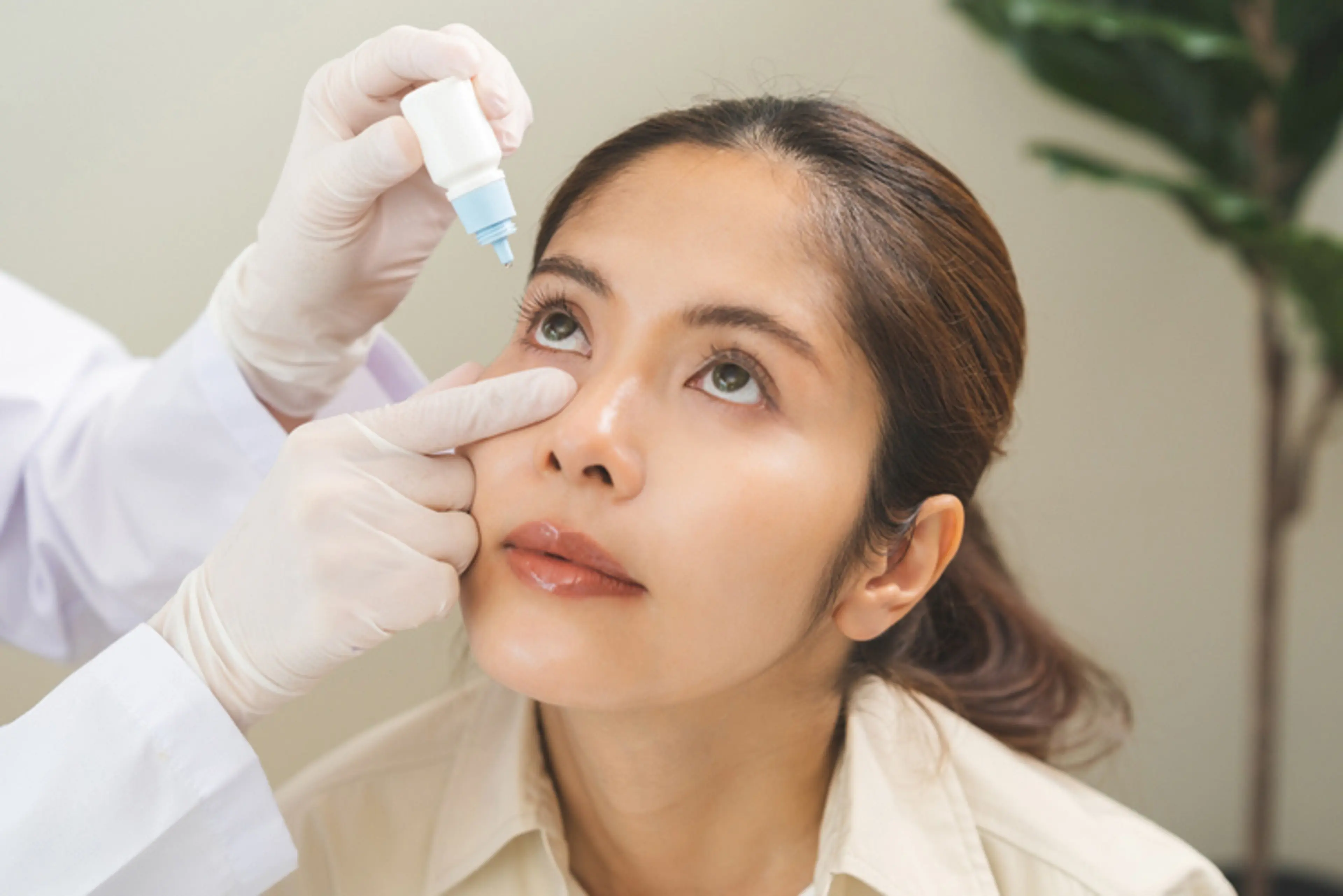
At Jryn Eye Clinic, we provide a custom set of postoperative drops:
We advise spacing each drop by at least 5 minutes, so the medications don’t dilute each other.
If debris forms at the lash line:
Close your eyes gently—don’t squeeze them shut.
Use a new pad for each eye to prevent cross-contamination.
Avoid products like baby shampoo or cosmetic cleansing wipes for the first week. Though these are marketed as gentle, they contain surfactants and fragrances that can irritate the ocular surface.
You can shower the next day—but be cautious:
Avoid splashing water directly onto your face.
A small but practical tip from our team: wear lightly tinted protective glasses in the shower for the first few days. It sounds funny, but it prevents soap and shampoo from dripping into your eyes—a surprisingly common cause of early irritation.
The cornea heals best when hydrated. Use your prescribed artificial tears consistently—even if your eyes feel fine. This keeps the tear film balanced and prevents dryness, which can otherwise lead to blurred vision or minor irritation.
Limit screen time for the first two to three days. Blinking less while using digital devices can dry out your eyes faster than you think.
Even the cleanest eyes can get irritated if the environment or daily habits aren’t controlled. For at least one week after SMILE, avoid the following:
These habits may seem minor, but they directly influence how smoothly your recovery goes. In our clinic, patients who follow these guidelines often return to full comfort and visual stability within just one week.
Neglecting gentle cleaning doesn’t usually cause severe problems—but it can slow healing. Residual debris along the lash line can lead to mild blepharitis (eyelid inflammation), while touching or rubbing can cause epithelial microdisturbance that blurs vision temporarily.
In rare cases, bacterial contamination can cause keratitis, a serious infection. Early signs include increasing redness, pain, and discharge. If you notice these, contact your doctor immediately—early treatment leads to full recovery in nearly all cases.
At Jryn Eye Clinic, we take a “better safe than sorry” approach. Even a short visit or call helps us assess whether your eyes are healing perfectly or need extra care.
What often causes trouble isn’t lack of cleaning—but over-cleaning. Rinsing too often with saline or overusing eye drops can wash away the protective lipid layer of your tears, leading to dryness or stinging.
Dr. Han Sang Yeop, our lead ophthalmologist, often puts it this way:
“After SMILE, your job isn’t to ‘fix’ anything—it’s to create the calmest possible environment for your eyes to heal on their own.”
That means rest, hydration, and trust in the process. Within 24 hours, most patients already enjoy clear vision; within a week, their corneas are almost completely recovered.
In the days following your SMILE surgery, your vision begins a remarkable transformation. But that transformation isn’t only about the laser—it’s about how you care for your eyes afterward.
To recap:
Wash your hands before touching your eyes.
Use sterile saline or artificial tears for cleaning—never tap water.
Gently wipe around, not on, the eyes.
Follow your doctor’s medication schedule faithfully.
Avoid makeup, swimming, or rubbing for the first week.
Your eyes are resilient, but they thrive on gentleness. Treat them kindly, give them rest, and they’ll reward you with clear, lasting vision.
If you’ve recently undergone SMILE or are planning to, and you want trusted, personalized post-surgery care, Jryn Eye Clinic in Busanjin-gu, Busan, is here for you. Our team will guide you through every step of healing—ensuring that your vision correction journey is not only successful but deeply reassuring.