Home / Articles
How to Choose Between Multifocal & Monovision
Home / Articles
How to Choose Between Multifocal & Monovision
In Korea, where people are increasingly proactive about health and preventive care, vision correction has become more personalized than ever. As patients approach their 40s and 50s, presbyopia—age-related difficulty focusing up close—becomes a daily reality. Suddenly, reading menus, checking messages, or doing close work isn't as effortless as before. And when it comes time to consider solutions, especially after cataract surgery or in place of glasses, two terms often surface: multifocal and monovision. But what do they really mean? And more importantly, which one is right for you?
As ophthalmologists at Jryn Eye Clinic in Busan, we encounter this decision point often. Each approach has its strengths—and knowing which fits your lifestyle is more than a technical choice. It’s about how you want to see, live, and function every day. This article will guide you through the clinical differences, psychological adjustments, and real-life implications of these two vision correction strategies, so you can make a confident, well-informed choice.
Monovision involves correcting one eye (usually your dominant one) for distance vision and the other for near vision. It’s a clever brain trick. Instead of seeing with both eyes equally, your brain gradually adapts, choosing the sharper image based on where you’re looking. Over time, most people adapt to this selective viewing without noticing much difference in everyday life.
In the context of contact lenses, monovision is straightforward and reversible. You wear a lens for distance in one eye and a near-vision lens in the other. After cataract surgery, the same concept applies with monofocal intraocular lenses (IOLs) targeted to different focal lengths. This approach can also be used in refractive surgeries such as LASIK.
In Korea, where many patients are eager to maintain work productivity and reading ability well into their 60s, monovision has become a convenient transitional solution. It especially appeals to people who already wear contact lenses and are comfortable experimenting with their vision.
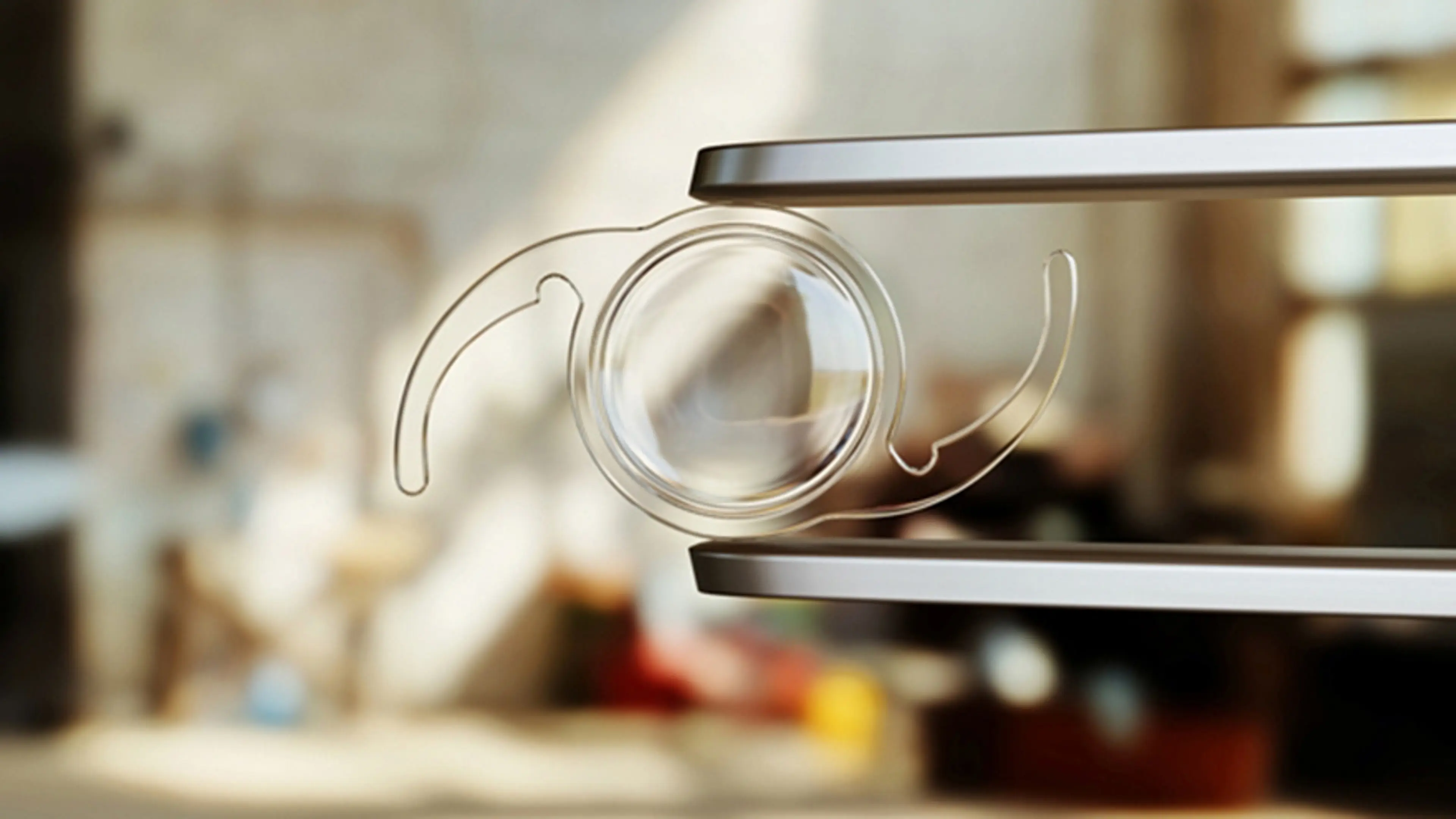
Multifocal lenses—whether in contacts or IOLs—embed multiple focal zones into each lens. Rather than splitting roles between eyes, both eyes work together across a range of distances. Bifocal and trifocal IOLs, for example, allow patients to shift focus naturally from near to far without needing separate lenses or readers.
There are also advanced contact lenses that use concentric ring designs or aspheric transitions to blend distances, offering a seamless experience once the brain adapts. With growing demand for spectacle-free vision, especially among active retirees and professionals, multifocal solutions have rapidly advanced and become widely available in Korea.
Easy adaptation for many patients
More affordable and flexible, especially with trial contacts
Effective for patients with strong prescriptions or astigmatism
Reversible in most cases
Shorter recovery and fewer side effects in surgical settings
May reduce depth perception, particularly in low light
Not ideal for tasks requiring fine depth judgment like driving at night, sports, or technical crafts
Some people never fully adapt to the imbalance, especially if one eye strongly dominates the other
Visual fatigue or eye strain can be more common with long-term use
Excellent binocular vision and depth perception
High levels of spectacle independence
Clear vision across distances (near, intermediate, far)
Preferred by many patients once adapted
Ideal for digital device users, multitaskers, and people who frequently change visual focus
Initial adaptation period is longer, especially in older patients
May cause halos or glare at night, especially around headlights or digital screens
Higher cost and fitting complexity
Less tolerance in patients with specific visual or neurological issues, including dry eye or retinal pathology
You’re cost-conscious or prefer flexibility
You’ve previously tolerated monovision with reading glasses or contacts
You don’t rely heavily on precise depth perception
You want a reversible solution before committing to surgery
You’re younger (early 40s to early 50s) and just beginning to feel presbyopia symptoms
You want seamless visual clarity at all distances
You frequently drive at night or work in varied lighting conditions
You’re comfortable with premium solutions
You desire maximum spectacle independence
You’re an active person engaging in reading, digital work, and outdoor activities
To be honest, many patients come in expecting a simple answer. But the truth is, vision isn’t one-size-fits-all—especially in Korea, where people are tech-savvy, spend hours on screens, and value clear sight both for work and leisure. We often tell our patients: don’t just think about how you see today—think about how your needs will evolve five, ten, or fifteen years down the road.
One approach we’ve found effective is modified monovision. This hybrid strategy uses a multifocal lens in one eye and a monofocal in the other. It maintains more natural depth perception than full monovision, while reducing the adaptation demands of dual multifocals.
We also pay attention to subtle factors: Are you a frequent traveler? A hobbyist photographer? Do you read traditional books or rely solely on screens? Do you do a lot of night driving? Each detail informs what your best correction will be. We also consider eye dominance, tear film stability, and even facial ergonomics (like reading posture or head tilt habits).
At Jryn Eye Clinic, we use customized pre-surgical simulations and detailed vision testing to mimic both monovision and multifocal outcomes before patients make their choice. It's not only about sharpness—it's about comfort, long-term satisfaction, and preserving the joy of seeing clearly in every moment.
What patients often overlook is how much the brain plays a role. It’s not just about your eyes—it’s about neuroadaptation. Your brain decides whether a solution is comfortable. That’s why we always recommend trialing lenses before any permanent decision, whether you're considering surgery or simply switching from readers.
Another overlooked factor is lifestyle rhythm. For instance, Korean patients who commute on subways, shop in crowded indoor markets, or switch frequently between digital screens and paper books tend to benefit more from multifocal designs. In contrast, people who spend long hours driving or work with their hands at close range (e.g., dentists, craftspeople) may do better with monovision or hybrid approaches.
Lastly, don't underestimate the emotional side. Some patients feel “younger” or more independent when they no longer need reading glasses. Others prefer visual stability over complexity. At Jryn Eye Clinic, we take both into account.
Choosing between multifocal and monovision isn’t about finding a “winner.” It’s about identifying the solution that best fits your life. Monovision may offer simplicity and adaptability. Multifocal may offer sophistication and range. And sometimes, the best answer is a little of both.
In truth, the best results come from alignment—between your physical vision needs and your personal lifestyle preferences. And that’s not something a website or general article can determine for you. It takes careful evaluation, guided simulation, and conversation with experts who take the time to listen.
If you’re at the crossroads of presbyopia or considering cataract surgery, don’t rush the decision. Schedule a consultation with a trusted clinic like Jryn Eye Clinic in Busan, where we’ll walk through your visual priorities, simulate your options, and guide you toward a solution that serves you now—and into the future.