Home / Articles
Fixing Halo & Glare Problems After SMILE
Home / Articles
Fixing Halo & Glare Problems After SMILE
When you imagine life after SMILE surgery, you probably think of sharp, glasses-free vision and hassle-free mornings. And for most patients, that’s exactly what they get. But for some, especially in the early weeks, a new kind of visual disturbance takes center stage: halos and glare.
If you’re seeing rings around headlights or struggling with night driving after your vision correction, you’re not alone—and you’re not doing anything wrong. These symptoms are common, manageable, and, in most cases, temporary.
At Jryn Eye Clinic in Busanjin-gu, Busan, we specialize in helping patients navigate not just the procedure, but the full healing journey. Dr. Han Sang Yeop and his team are deeply familiar with the nuances of SMILE outcomes—including how small anatomical differences, healing patterns, and lifestyle habits can affect your vision clarity. Here’s what you need to know about fixing halos and glare after SMILE—and when it might be time to seek further help.
Let’s define the experience. Post-SMILE visual disturbances can include:
While these effects can sound similar, they stem from slightly different optical issues and can have different solutions. But together, they form the constellation of early symptoms some patients experience as their eyes heal and adapt.
For many patients in Korea, especially those used to bright city environments and frequent night driving, these symptoms can feel especially intrusive. If you’ve ever squinted through the dazzling sea of headlights in Busan traffic, you’ll know just how unsettling halos and glare can be.
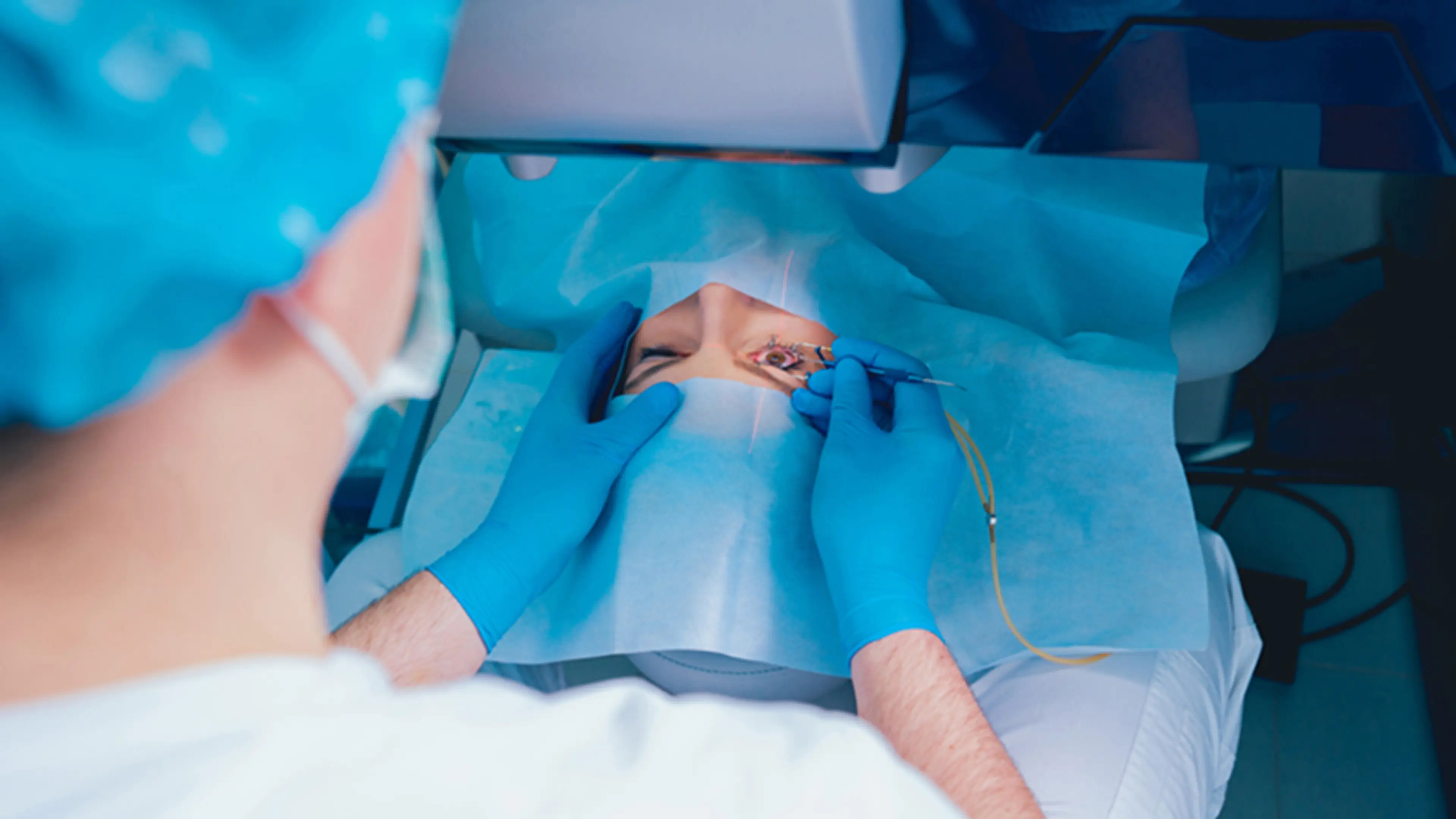
SMILE (Small Incision Lenticule Extraction) is less invasive than traditional LASIK and flap-based procedures, but it still reshapes the cornea. Visual disturbances arise when light enters the eye and interacts with healing or irregular tissue. Here’s why that matters:
Even a small incision changes the way light bends through your eye. Early healing can involve:
Slight swelling
Microscopic surface irregularities
Minor variations in how the lenticule was removed
These subtle surface differences can scatter incoming light, especially in the dark when your pupil dilates. Patients with a thinner tear film or pre-existing dry eye symptoms may notice these effects more prominently.
Many Korean patients naturally have larger pupils in dim settings. This is both a genetic trait and a lifestyle adaptation due to extensive indoor screen use. When your pupil dilates beyond the treated zone during nighttime, light may pass through untreated peripheral areas of your cornea. This is a major reason why halos and glare become more pronounced at night.
Even though SMILE is known for preserving corneal nerves better than LASIK, dry eye still occurs in some patients. A disrupted tear film can create a patchy surface, bending light unpredictably. In Korea, dry eye is increasingly common due to air pollution, high screen exposure, and indoor heating/cooling systems.
If your corneal reshaping was slightly off-center or undercorrected, your visual system might struggle with contrast sensitivity, especially at night. Even a decentration of less than 0.5 mm can introduce higher-order aberrations that show up as halos or glares.
Your brain and eyes need time to recalibrate. Some of these symptoms simply fade as your visual cortex adapts to your new optics. But that process varies per person. Younger patients may adapt faster, while those with more rigid visual habits might take longer.
This is one of the most common questions we get. Based on thousands of patient outcomes, here’s what to expect:
In our experience at Jryn Eye Clinic, only about 3-5% of SMILE patients continue to report disturbing halos or glare beyond the 6-month mark—and nearly all of these cases are manageable with tailored interventions.
If halos or glare are still affecting your quality of life:
Jryn Eye Clinic doesn’t just perform SMILE—we guide you through every phase. Here’s what sets us apart:
If you’ve had SMILE at another clinic and are still struggling with halos or glare, we can help assess and propose corrective strategies tailored to your eyes.
Halos and glare can be disorienting, especially if you weren’t expecting them. But they’re not unusual, not dangerous, and—most importantly—not permanent for the majority of patients.
To be honest, one of the most important steps is simply not ignoring what you’re seeing. Whether you’re in the early recovery stage or months out, your vision deserves care, attention, and clarity.
At Jryn Eye Clinic, we believe that the journey to clear vision doesn't end when the laser turns off. If you're experiencing symptoms, schedule a comprehensive check-up with our team. We’ll work with you to understand the cause, offer realistic timelines, and map out a plan that fits your eyes—not just the textbook definition of recovery.