What Are Eye Floaters?
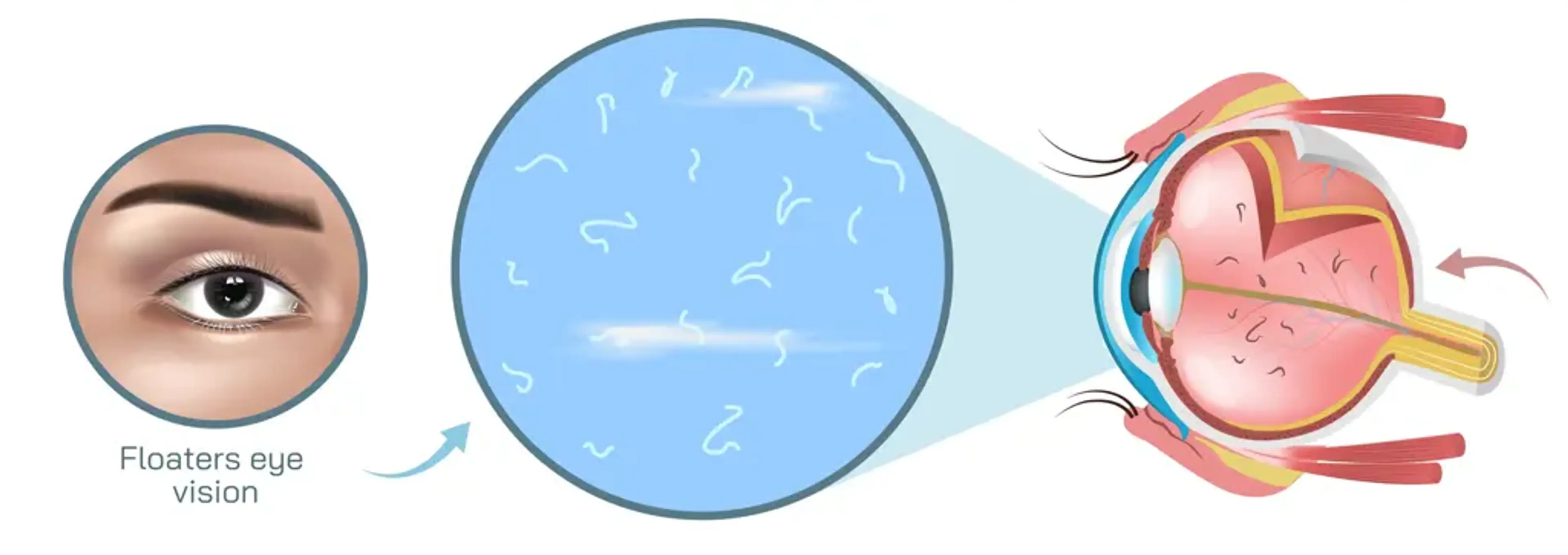
what-are-eye-floatersImagine you're looking at a clear blue sky, and suddenly you notice small spots or thread-like shapes drifting across your vision. These floating specks are known as eye floaters, and while they can be distracting, they're usually harmless. Floaters occur when tiny clumps of cells or gel-like material in the vitreous—a gel that fills the space between your lens and retina—cast shadows on your retina. The shadows are what you perceive as floaters.
As we age, the vitreous gel tends to shrink and become more liquid, causing fibers to clump together. These clumps can then float in the eye, creating the visual disturbances we see as floaters. In most cases, these are a normal part of aging and become less noticeable as your brain adjusts to them. However, if the number or nature of your floaters suddenly changes, it could indicate a more serious problem—this is when a visit to a retina specialist becomes essential.
Retinal Floaters vs. Vitreous Floaters: Understanding the Difference
retinal-floaters-vs.-vitreous-floaters:-understanding-the-differenceWhile all floaters share similar characteristics, it’s important to distinguish between vitreous floaters and retinal floaters, as they have different causes and implications for your eye health.
Vitreous Floaters: These are the most common type and are caused by the natural aging process. When the vitreous shrinks and becomes more liquid, it can cause fibers within it to clump together. The floaters tend to look like tiny spots, threads, or cobwebs and move when you move your eyes. In most cases, these floaters are harmless and can be ignored.
Retinal Floaters: These occur when the retina, the light-sensitive tissue responsible for turning light into visual signals for the brain, is affected. Retinal floaters can indicate more serious conditions such as retinal tears or detachment, which require immediate attention. If left untreated, these conditions can lead to permanent vision loss.
Common Causes of Eye Floaters
common-causes-of-eye-floatersEye floaters can be caused by a variety of factors. While some causes are benign, others may indicate a more serious problem. The most common cause of floaters is posterior vitreous detachment (PVD), a natural part of the aging process. As the vitreous gel shrinks, it can pull away from the retina, leading to floaters.
Other potential causes include:
Eye Injuries: Trauma to the eye can cause bleeding or inflammation within the vitreous, leading to floaters.
Inflammation (Uveitis): Conditions like infections or autoimmune diseases can cause inflammatory debris to appear as floaters.
Retinal Tears or Detachments: These serious conditions can cause a sudden increase in floaters and may also be accompanied by flashes of light.
Diabetic Retinopathy: In patients with diabetes, abnormal blood vessels in the retina may leak blood into the vitreous, causing floaters.
Eye Surgeries or Medications: Some procedures or drugs may have side effects that lead to floaters.
While most floaters are benign, a sudden increase in their number, or other changes in vision, may be a sign of a serious issue that requires immediate evaluation by a retina specialist.
When Should You See a Retina Specialist?
when-should-you-see-a-retina-specialistMost floaters don’t require treatment, but there are certain symptoms that should never be ignored. If you experience any of the following, it’s crucial to see a retina specialist immediately:
Sudden Increase in Floaters: A sudden surge in the number or size of floaters may indicate retinal tears or internal bleeding.
Flashes of Light: Seeing flashes or sparkles of light, especially when combined with floaters, may signal that the vitreous is pulling on the retina.
Loss of Peripheral Vision: A dark curtain or shadow in your field of vision may indicate
retinal detachment.
Blurred or Distorted Vision: Floaters combined with blurry or distorted vision need urgent attention.
Floaters After Eye Trauma: Any new floaters following an eye injury should be evaluated by a professional without delay.
Retina specialists are highly trained ophthalmologists who focus on diagnosing and treating issues related to the retina and vitreous. Using specialized diagnostic tools, they can detect problems early, helping to prevent serious vision loss.
Diagnostic Methods for Eye Floaters
diagnostic-methods-for-eye-floatersTo accurately diagnose the cause of your floaters, a retina specialist will use a variety of advanced diagnostic methods:
Dilated Fundus Examination: This test involves eye drops to widen your pupils, allowing the doctor to thoroughly examine the retina.
Optical Coherence Tomography (OCT): OCT uses light to produce high-resolution images of the retina, helping specialists spot any tears or abnormalities.
Ultrasound Imaging (B-scan): If the retina is obscured, ultrasound imaging can provide clear images of the retina and vitreous.
Fluorescein Angiography: A dye is injected into your bloodstream to highlight the retinal blood vessels, helping identify any leaks or damage.
These advanced tools ensure that specialists can detect the exact cause of your floaters and any underlying retinal conditions.
Treatment Options for Eye Floaters
treatment-options-for-eye-floatersWhile many floaters don’t require treatment, there are several options for those whose floaters are bothersome or linked to more serious conditions:
Observation: In most cases, floaters will become less noticeable over time as the brain adapts to them. If the floaters aren’t significantly affecting your vision, observation may be the best option.
Laser Vitreolysis: This minimally invasive procedure uses a YAG laser to break up or vaporize floaters, improving clarity and reducing their visibility.
Vitrectomy Surgery: In severe cases, when floaters are causing significant vision problems or are linked to retinal tears or detachment, a vitrectomy may be necessary. This procedure involves removing the vitreous gel and replacing it with a clear solution to eliminate floaters.
Each treatment has its own risks and benefits, so it’s important to consult with a retina specialist to determine the best approach for your specific condition.
Advances in Retinal Care
advances-in-retinal-careRecent advancements in retinal care have significantly improved the diagnosis and treatment of eye floaters. Technologies like optical coherence tomography (OCT) provide detailed cross-sectional images of the retina, allowing specialists to detect issues that were once difficult to identify. The use of femtosecond lasers in vitrectomy surgeries has also made these procedures safer and more effective, improving patient outcomes.
Clinics like
Jryn Eye Clinic in Busan, South Korea, are utilizing these cutting-edge technologies to offer precise diagnoses and tailored treatment options. Their expertise in retinal care has made them a trusted name in the field.
Real-Life Patient Experiences
real-life-patient-experiencesAt Jryn Eye Clinic, many patients have benefited from advanced treatments for their eye floaters. One patient who struggled with severe floaters that impacted their ability to read and drive opted for laser vitreolysis. Within weeks, they noticed a dramatic improvement in their vision. Another patient with diabetic retinopathy and vitreous hemorrhage underwent vitrectomy surgery, restoring their vision and preventing further damage to the retina.
These patient success stories highlight the importance of seeing a retina specialist for personalized care and treatment.
Conclusion
conclusionEye floaters are a common part of aging, but when they suddenly increase in number or are accompanied by flashes of light or changes in vision, it’s essential to seek professional care. Early diagnosis and treatment can prevent serious conditions like retinal detachment, protecting your vision and quality of life.
At Jryn Eye Clinic, we use the latest diagnostic tools and treatments to provide patients with the best possible care. If you’re concerned about your floaters or need help with a retinal issue, don’t wait—schedule an appointment with a retina specialist today.