Home / Articles
Do You Have Keratoconus? 5 Early Warning Signs
Home / Articles
Do You Have Keratoconus? 5 Early Warning Signs
Imagine looking through a slightly warped window. Everything is still there, but the edges blur, the lights scatter, and nothing quite comes into full focus. For many people, that’s what the early stages of keratoconus feel like—an evolving change in vision that doesn’t improve with a new prescription. It often begins quietly in adolescence or early adulthood, and because the symptoms overlap with common refractive errors like astigmatism or nearsightedness, it’s easy to overlook.
At Jryn Eye Clinic in Busan, we frequently see patients who have spent years cycling through stronger glasses and contact lenses without realizing a structural change is happening in their eyes. They tell us they feel unsure, frustrated, or even dismissed—like their symptoms aren’t being taken seriously. If you’ve ever felt the same, this guide is for you.
We’ll walk through five early signs of keratoconus that you shouldn’t ignore, explain why they matter, and offer insight into what can be done—especially when diagnosed early. With modern diagnostics and proactive treatment, most cases can be managed effectively without vision loss. But it all starts with awareness.
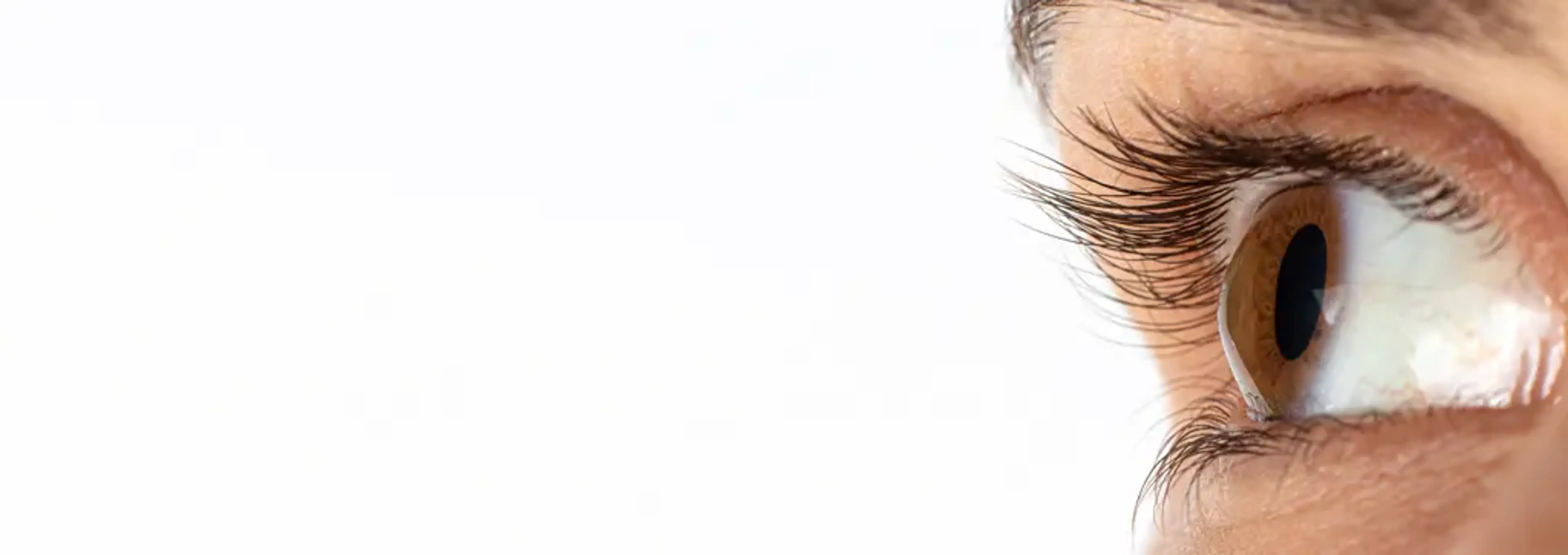
Your cornea is normally smooth and dome‑shaped—like a round, clear window that bends light neatly into focus. In keratoconus, that dome becomes thinner and begins to bulge outward into a cone‑like shape. That changes how light enters the eye, often leading to irregular vision that standard glasses can’t fully correct.
To be honest, this condition can be subtle at first. Many patients don’t realize something is off until their vision changes quickly over a short period or nighttime glare becomes truly debilitating. It is often confused with astigmatism, and without topography or tomographic imaging, the distinction can be missed. This is why so many people spend years in a frustrating cycle of changing prescriptions, trying different contact lenses, and wondering why their vision never feels "right."
In Korea, especially in young male adults serving military service or preparing for university entrance exams, these subtle changes can be missed until they interfere with critical daily tasks. The condition also disproportionately affects individuals with allergies or atopic conditions—including chronic eye rubbing, which accelerates the progression.
We all know what it’s like to need a new glasses prescription once a year. But with keratoconus, the problem isn’t just “being a bit more nearsighted” — it’s irregular astigmatism.
Straight lines appear wavy or bent
Letters on the page seem to jump around
One eye sees sharper than the other, even with glasses
Your vision doesn’t “fix” entirely with updated lenses
In keratoconus, the cornea’s surface becomes uneven. Instead of light focusing cleanly, it scatters unpredictably. Regular glasses can correct simple astigmatism, but they can’t straighten irregular curves.
This distortion is different from the blur of myopia or hyperopia. Patients often describe it as if there's a translucent film over their eyes, or as if they are seeing double or ghost images even with glasses on. Sometimes, it affects only one eye, making binocular vision uncomfortable and straining.
Have you ever heard someone joke that they “need new glasses every month”? With keratoconus, that can almost be literal.
Your prescription changes significantly (more than usual) in a short period
You go from mild to moderate astigmatism quickly
Contacts you used to wear suddenly don’t fit right
In early keratoconus, the cornea thins and bulges gradually, but sometimes the changes can accelerate over months rather than years. That makes your optical prescription unstable because the way light bends through the cornea keeps shifting.
This is especially common in younger patients because their corneal tissue is more elastic—and unfortunately more prone to deformation. In Korea, where vision checks are often done yearly for school or work, such changes might be detected early if patients follow up consistently. But if you're not visiting a clinic with corneal mapping capabilities, these red flags might be missed.
My patients often describe this one in their own emotional language:
Sure, anyone can get glare at night, especially if your lenses are scratched. But ghost images—multiple shadowed outlines of a single object—are classic for early keratoconus.
In low light, your pupils dilate to take in more light. But that also means more of the distorted corneal surface is being used for vision. What might be subtle in daylight becomes glaringly noticeable under streetlights or when driving.
At Jryn Eye Clinic, many keratoconus patients first come in because of night driving difficulty. The halos, streaks, and ghosting can make navigating the roads genuinely unsafe. Unfortunately, some dismiss these signs as "just poor night vision" or attribute it to fatigue, delaying diagnosis.
You might be tempted to dismiss this one as “just tired eyes after work,” but pay attention to how often it happens and in what context.
Eyes feel tired even after short screen sessions
You rub your eyes often because of discomfort
Contact lenses feel uncomfortable or unstable on your eye
With keratoconus, the eye constantly struggles to focus. The brain tries to compensate, intensifying ocular muscle effort. Over weeks and months, that sustained effort causes real fatigue—not the mild tiredness most people experience.
At our clinic, we make it a point to ask about eye rubbing—especially in patients with allergies, blepharitis, or dry eye. Treating those root causes helps reduce rubbing behavior, which in turn slows keratoconus progression.
This asymmetry isn’t a little difference in prescription—this is a noticeable functional imbalance.
One eye consistently sees clearer than the other
Depth perception feels off
You favor one eye when reading or focusing
Keratoconus often begins in just one eye—or starts there and progresses faster in that eye. The uneven corneal shape leads to uneven vision between the two eyes, and your brain starts compensating by favoring the “better” eye.
This can sneak up on people. A friend or partner might even notice it before you do: “Why do you tilt your head like that when you read?” Or you may find yourself closing one eye during screen use or relying on one side when navigating stairs or slopes.
Here’s the good news: You don’t have to just “watch and wait.”
Think of this as a structural reinforcement for your cornea. It strengthens the collagen fibers, slowing or halting progression. For many patients, especially younger ones, this can be vision‑preserving. CXL is now FDA-approved and widely available in Korea.
As the cornea changes, standard lenses often no longer provide crisp vision. Rigid gas permeable (RGP) or scleral lenses vault over the irregular cornea and offer much clearer optics. At Jryn Eye Clinic, we use advanced topography-driven lens fitting to match each eye’s unique shape.
When keratoconus has progressed significantly, a transplant may be needed. But with early detection and treatments like CXL, most patients can avoid this. In fact, many maintain functional vision for decades with the right management.
Keratoconus doesn’t always cause dramatic symptoms at first. It’s more like a whisper before it becomes a shout. That’s why patients often think it’s just aging eyes or a “bad prescription.”
But those five early signs—especially when they cluster together—are meaningful:
Persistent blurred or distorted vision
Frequent need for stronger prescriptions
Halos and ghosting, especially at night
Eye strain and discomfort
Noticeable difference between your eyes
If you’re nodding along to more than one of those, it’s worth a corneal check. Ask your eye care provider about corneal topography—it’s a simple, non‑invasive test that can give you clarity about what’s really going on.
And if you want personalized guidance or specialist care in Busan, a clinic like Jryn Eye Clinic that focuses on precision diagnostics and corneal conditions can help you understand your eyes and your options. Our team uses the latest technology and patient-first care models to ensure no subtle warning sign goes unchecked.